
 Kara Davidson
Pairing wine with dinner is simple. Cooking with it takes a bit more intention. When used thoughtfully, wine can deepen flavor, balance richness, and add subtle complexity to everything from sauces to slow cooked meals. With a few foundational tips, incorporating wine into your recipes becomes far less intimidating.
Start With the Right Bottle
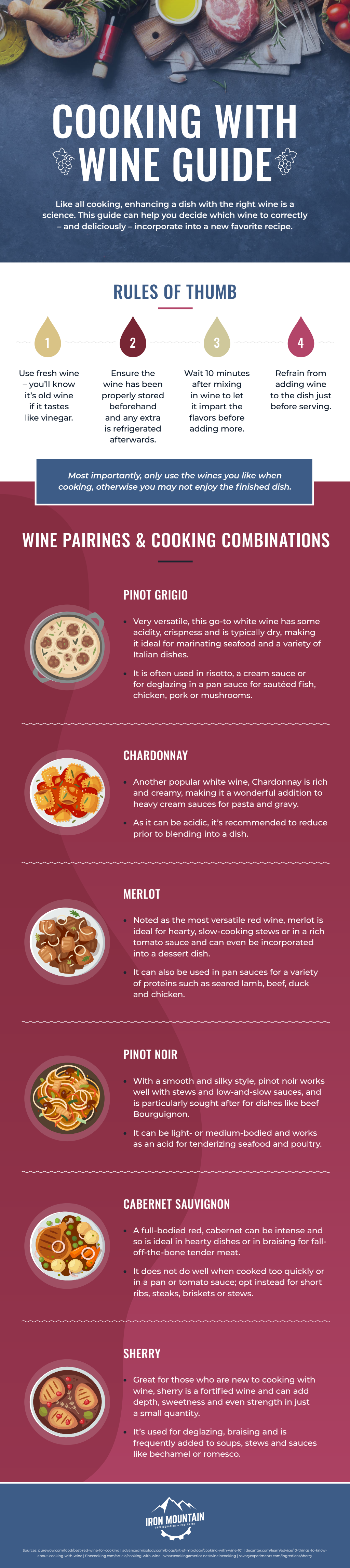
The most important rule when cooking with wine is to choose one you enjoy drinking. If a wine tastes overly dry, too sweet, or simply unpleasant on its own, those same qualities will come through in your dish. A good guideline is straightforward: if you would not pour it into a glass, do not pour it into your pan.
Quality matters, but that does not mean you need an expensive bottle. Avoid heavily salted cooking wines and instead select an affordable, drinkable option. Also be sure the wine is fresh and properly stored. Once wine turns, it develops a sour, vinegary flavor that can quickly overpower a recipe. Refrigerate leftovers and use them within a reasonable time frame.
Understanding Wine’s Role in Cooking
Wine typically serves one of three purposes in the kitchen. It can enhance flavor, act as a marinade component, or function as a cooking liquid. In each case, the goal is to elevate the natural flavors of the ingredients rather than conceal them. A modest amount is usually enough to achieve balance without overwhelming the dish.
Timing also plays an important role. Adding wine early in the cooking process allows the alcohol to cook off, leaving behind concentrated flavor and acidity. If wine is stirred in at the last minute, it can taste sharp and unrefined. Giving it time to reduce ensures a smoother integration. Waiting at least ten minutes before tasting allows the flavors to settle and develop properly.
Choosing the Right Style
As a general rule, white wines complement lighter fare while red wines pair well with heartier meals. White varieties are often used in seafood dishes, poultry, cream sauces, and vinaigrettes. Their acidity makes them especially useful for deglazing pans after sautéing fish, pork, or vegetables.
Red wines are frequently chosen for richer proteins such as beef, lamb, and duck. They are also common in tomato-based sauces and slow simmered stews, where they add depth and body.
That said, cooking is as much about creativity as it is about guidelines. When experimenting, consider versatile options like pinot grigio for white or merlot for red. These approachable wines tend to blend easily with a variety of ingredients and are a good starting point for building confidence.
Cooking with wine does not require formal training. With the right bottle, thoughtful timing, and a willingness to experiment, you can add an extra layer of flavor that transforms everyday meals into something memorable.
For further pointers on cooking with wine, please see the accompanying resource from Iron Mountain, a commercial refrigeration distributor.