
 Kara Davidson
When evaluating rental performance, it is easy to focus on unit level features such as finishes, layouts, or recent upgrades. While these elements matter, they rarely tell the full story. Rentability is shaped just as much by what surrounds a property as by what is inside it. Location influences how renters search, compare, and ultimately decide, often before they ever step through the front door.
Renters today approach the market with a lifestyle mindset. They are not just looking for a place to live, but for an environment that supports their daily routines, preferences, and priorities. A property that fits seamlessly into a renter’s lifestyle will often outperform a comparable unit in a less aligned location, even if the physical features are similar.
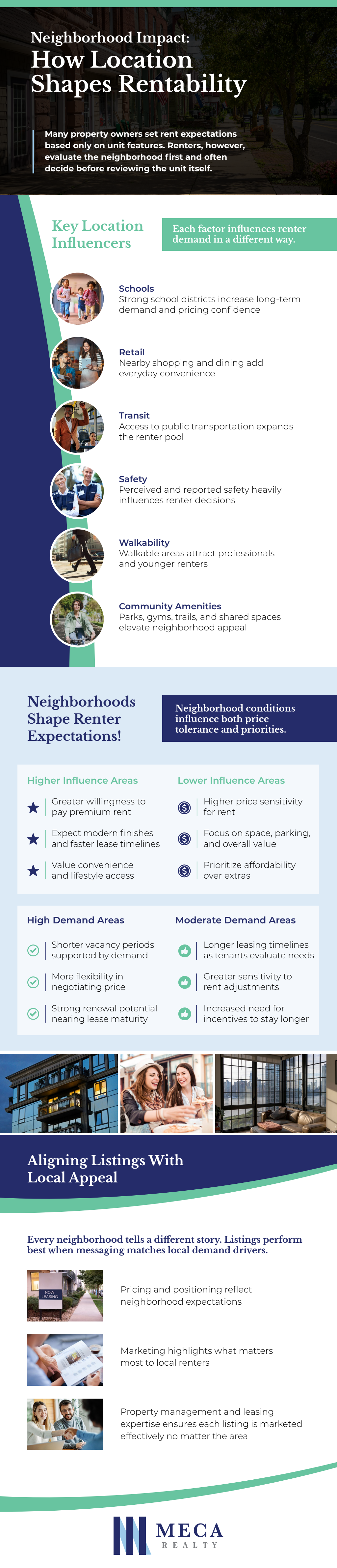
Neighborhood dynamics also affect how renters perceive value. In some areas, convenience, accessibility, and nearby activity create an expectation of efficiency and ease. In others, renters may prioritize space, flexibility, or long-term stability. These differences influence how renters interpret pricing, what tradeoffs they are willing to make, and how quickly they move through the decision process. Understanding these nuances helps owners and managers position properties to resonate with the right audience.
Another factor often overlooked is how location shapes leasing momentum. Certain neighborhoods naturally support faster decision making due to competition, familiarity, or reputation. In other areas, renters may take more time to evaluate options, ask more questions, or negotiate terms. Aligning leasing strategies with these patterns can improve consistency and reduce friction throughout the leasing cycle.
Marketing also plays a critical role in translating location into demand. A well-written listing does more than describe a unit. It frames the surrounding area in a way that connects with renter priorities. Highlighting proximity, accessibility, and neighborhood character helps renters envision how a property fits into their lives. This approach creates clarity and confidence, which are essential in a competitive rental environment.
Long-term performance is influenced by alignment as well. When renters choose a property that matches their expectations of the neighborhood, they are more likely to remain satisfied over time. This alignment supports stability, smoother renewals, and stronger relationships between residents and property teams.
Ultimately, successful rental strategies recognize that location is not a static attribute. It is an active driver of demand, perception, and experience. Owners and managers who account for neighborhood context are better positioned to set realistic expectations, attract the right renters, and support sustainable performance across their portfolio.
For a closer look at how neighborhood characteristics influence rental outcomes, explore the companion visual guide below from MECA Realty, a real estate company in Charlotte, NC.