
 Kara Davidson
A backyard pool is often seen as the perfect spot for fun, exercise, and relaxation. Yet many homeowners overlook one important detail: the quality of the air near the water. While balanced chemicals keep the pool clean, imbalanced ones can release irritants that affect how comfortably you breathe. Understanding how pool chemistry and ventilation work together is essential for maintaining a healthy environment.
Why Air Quality Matters as Much as the Water
Most people think of pool hazards as things they can see. Slippery decks, murky water, and worn equipment are common concerns. But the air above and around a pool can pose its own challenges, especially in indoor spaces or pool areas with limited airflow.
Here are the main factors that may affect respiratory comfort:
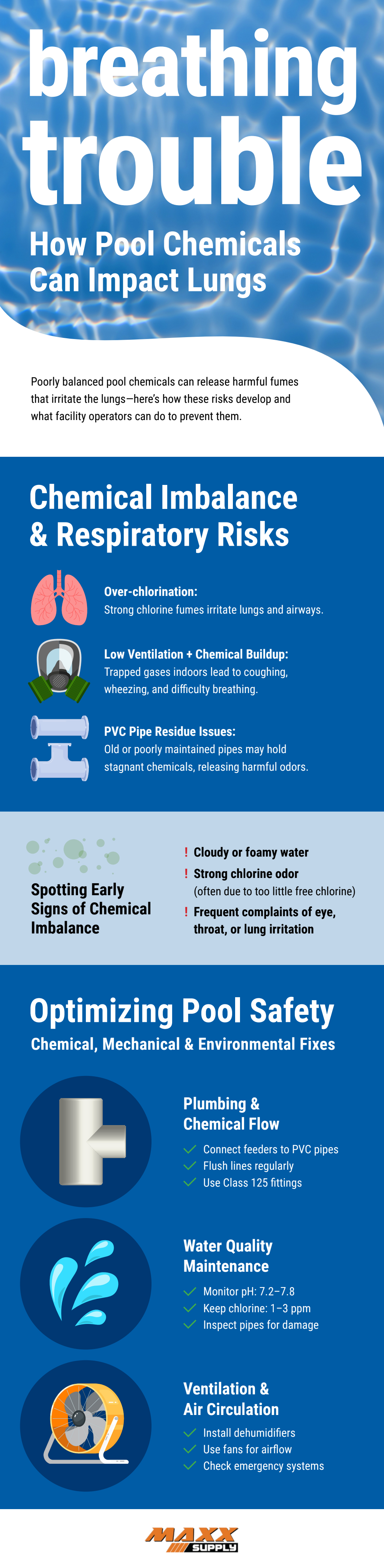
- Elevated Chlorine Concentrations
Chlorine is a necessary disinfectant, but an excess can create harsh vapors that irritate the throat and lungs. Young swimmers, people with asthma, and those sensitive to chemicals may notice coughing, tightness, or difficulty breathing when chlorine levels drift too high. - Poor Ventilation Around the Pool
Even when chlorine readings are normal, enclosed environments can trap byproducts that form as chlorine interacts with contaminants. Without consistent ventilation, these byproducts linger and create discomfort for anyone spending time near the pool. - Chemical Residue in Plumbing
Over time, older PVC plumbing may hold onto leftover chemical deposits. When water flow increases or temperatures rise, these residues can produce odors or release irritants. Choosing reliable fittings, such as high-quality Class 125 components, can help reduce this issue.
Signs Your Pool Area Needs Attention
You can often sense early warning signs without specialized equipment. Look for:
• Water that looks cloudy, foamy, or unusually dull
• A strong chemical smell that persists in the air
• Reports of coughing, burning eyes, or throat irritation from swimmers
These symptoms often point to air imbalance rather than simply water problems.
How to Improve Pool Air Quality
Maintaining healthy air starts with proper system care, consistent chemistry, and good airflow.
- Keep Plumbing Clear and Efficient
• Flush PVC lines regularly
• Ensure chemical feeders are connected correctly
• Use appropriate Class 125 fittings designed for pool applications - Maintain Balanced Water Chemistry
• Keep pH within the recommended 7.2 to 7.8 range
• Hold chlorine to 1 to 3 ppm
• Inspect pipes and fittings at the beginning of each swim season - Support Better Ventilation
• Use dehumidifiers in enclosed pool rooms
• Improve natural airflow with fans or open designs
• Check emergency air systems and exhaust fans routinely
Clean Air Completes a Healthy Pool Experience
Maintaining a pool involves more than keeping the water clear and inviting. The air around the pool plays a major role in comfort and safety. When you prioritize chemical balance, pipe maintenance, and proper ventilation, you help create a healthier, more enjoyable environment for everyone.
Clear water is great, but clean, breathable air is just as important. With consistent care, your pool can remain a refreshing and safe escape all season long. For more on this, check out the accompanying resource from Maxx Supply, a supplier of schedule 80 elbows.