
 Kara Davidson
Self-employment can make family life more flexible, but it also makes financial decisions more personal. There is no HR portal reminding you to choose benefits, no payroll team setting aside taxes, and no employer match quietly nudging retirement savings forward. That does not make self-employed finances unmanageable. It means the household needs clear rules for how money moves.
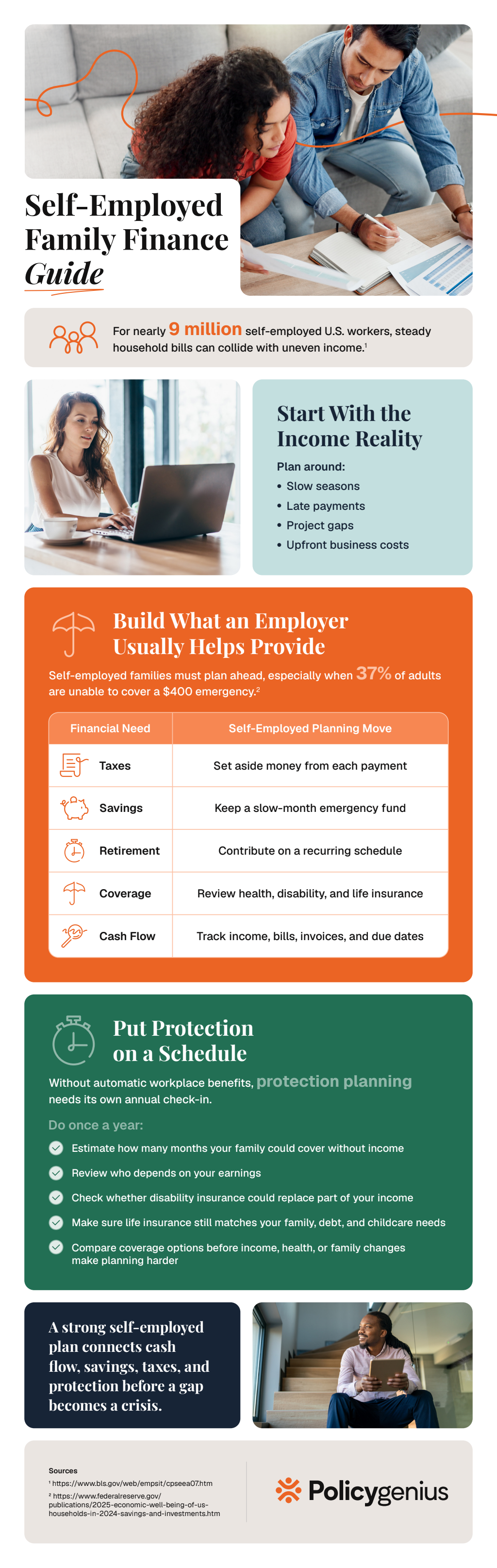
The best place to start is with predictability. Even when income changes from month to month, your system should stay steady. Create a standard process for each payment before it lands in everyday spending. Taxes, business expenses, household bills, savings, and insurance should each have a defined role. This helps prevent a strong month from being spent too quickly or a slow month from creating stress.
It also helps to separate business confidence from household confidence. A packed client calendar can feel secure, but signed work is not the same as money in the bank. Families that rely on self-employed income should plan around payment timing, contract gaps, and the chance that a client relationship changes. A good plan gives every dollar a role before it moves into everyday spending.
Make Income More Usable
Self-employed households often need a pay-yourself structure. Instead of pulling money from the business whenever bills come due, choose a regular owner’s draw or household transfer. That amount can be adjusted over time, but it should be based on what the business can support after taxes, expenses, and reserves.
A separate tax account can also reduce stress. Estimated taxes are easier to handle when money is set aside as income comes in. The same logic applies to irregular costs, such as annual software renewals, professional fees, equipment, insurance premiums, and slower work periods. These costs are easier to manage when they are treated as expected expenses.
Retirement savings should have a place in the system too. Self-employed workers have several account options, and the right fit depends on income, business structure, and savings goals. The key is to make contributions part of the rhythm of the business, rather than a decision left for whatever is available at year-end.
Protect the Household Behind the Business
A family finance plan should account for what happens if work is interrupted. Savings can help cover short income gaps, while insurance can help with larger risks that affect your ability to earn. Disability insurance can help replace part of your income if an illness or injury keeps you from working. Life insurance can help your family continue paying for housing, childcare, debt, and daily expenses if your income is no longer there.
Coverage should be reviewed when your life changes. A new child, mortgage, business loan, income increase, or shift from part-time freelancing to full-time self-employment can all change what your family needs.
For a closer look at building a family finance plan around self-employed income, explore the accompanying resource.